
QR Codes at Church: The Strategy Nobody Teaches You
 Reed VerdesotoDigital Systems Architect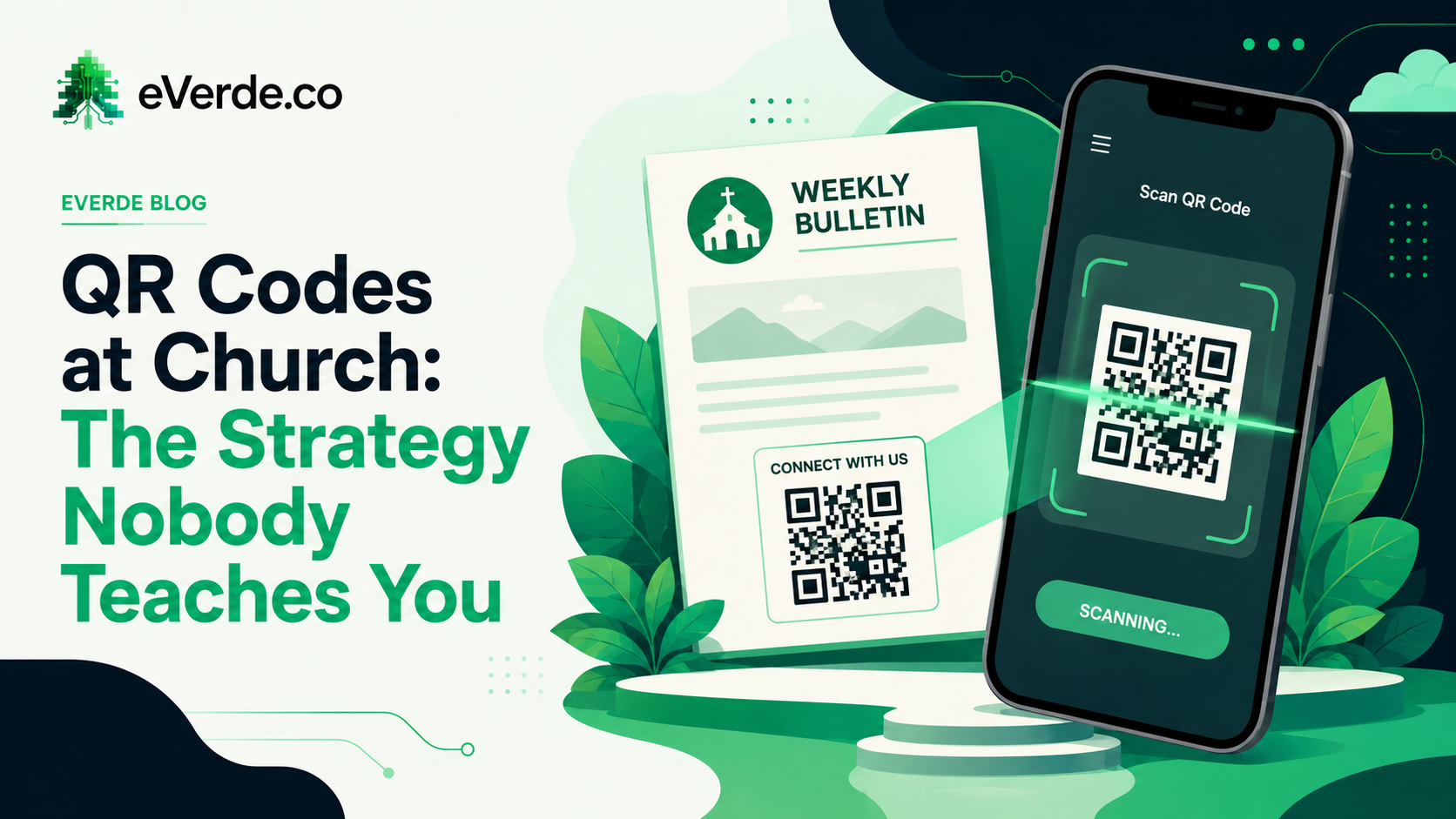
Every church I work with has QR codes somewhere. On the bulletin. On a slide. Maybe on a lobby screen. And almost none of them are working the way the church thinks they are.
The problem is not the QR code. The problem is that most churches treat QR codes as destinations when they are actually bridges. A QR code is not the thing. It is the path to the thing. And if the path has no context, no one walks it.
The Keith Story
I tell this story often because it reshaped how I think about every piece of church communication, including QR codes.
Keith is 86 years old. He studied lean manufacturing in Japan. He helped pioneer aluminum recycling in America. He understands systems better than most consultants I have met. And he missed a baptism because the paper bulletin he relied on did not reflect a last-minute schedule change due to a hurricane.
The church's response was to eliminate the paper bulletin entirely. "Paper is the problem. We need to go digital." And Keith was angry. Not because he loves paper. Because what the decision communicated to him was that he no longer mattered.
People do not hate change. They hate the loss of status. When you rip something away without giving someone a role in what replaces it, you create resistance. When you introduce tension instead, you create movement.
So we kept the paper bulletin. But we added a line at the top, right next to a QR code: "Printed on Friday. May be out of date. For all updates, scan here."
That single line changed everything. The bulletin was no longer pretending to be the source of truth. It acknowledged its own limitation. It pointed to something living. And it gave Keith authority over the decision to move to digital, rather than having digital forced on him.
QR Codes Are Bridges, Not Destinations
A QR code with no context is just a square on a page. Someone scans it and lands on... what? Your homepage? A generic event page? A giving form with no setup? If the landing experience does not match the expectation set by the physical context, you have wasted the scan.
Every QR code needs three things. A clear label that says what happens when you scan it. A landing page that delivers exactly that. And placement in a context where the action makes sense.
"Scan for this week's schedule" next to the QR code on a bulletin makes sense. A QR code floating on a slide with no text does not. "Connect with us" next to a QR code on a welcome card makes sense if it goes to a simple connection form. If it goes to your homepage, you just confused a guest who was trying to take a next step.
Where QR Codes Actually Work in a Church
On the bulletin, pointing to the Weekly Update page. This is the most effective placement I have seen across hundreds of churches. The bulletin is the handoff device. The Weekly Update is the living source of truth. The QR code is the bridge between them.
On seat backs or pew cards, pointing to the connection form. Guests are sitting in your service, deciding whether this place feels like home. A QR code to a simple connection form (name, email, one question) is the lowest-friction next step you can offer.
On lobby screens, pointing to event registration. Someone is standing in your lobby, looking at a screen that shows an upcoming event. If they can scan and register in ten seconds without talking to anyone, you just removed the biggest barrier to event participation: the social friction of walking up to a table and saying "I'm interested."
On the coffee station or welcome desk, pointing to the app download. People are standing still. They have their phones out. They are in a low-pressure environment. This is the best context for an app download QR because the person has time and attention to complete the action.
Where QR Codes Fail
On a slide that shows for eight seconds during announcements. Nobody is pulling out their phone fast enough to scan a projected QR code while the pastor is talking. The slide is gone before the camera focuses.
On a website. If someone is already on your website, they do not need a QR code. They need a button. QR codes are for bridging physical to digital, not digital to digital.
Pointing to your homepage. Your homepage has fifteen things competing for attention. A QR code should point to one specific action. If you send someone to the homepage, you just dumped them into the engagement formula's worst-case scenario: high confusion, high labor, undefined desire.
The Real Function of a QR Code
QR codes create tension. Not the bad kind. The productive kind. The kind that creates movement without force.
"Printed on Friday. May be out of date. Scan for updates." That is tension. It does not insult the paper bulletin. It does not demand digital adoption. It simply tells the truth and offers a bridge. The person holding the bulletin gets to decide whether to cross it.
That is the strategy nobody teaches. QR codes are not about technology. They are about giving people authority over their own next step. When you do that well, adoption happens naturally. When you do it poorly, you are just putting squares on paper and wondering why nothing changes.
Originally published on reedverde.com