

Your website is live. Your app is in the store. The SnapPages look clean. The events are structured. The media library is organized. Everything is exactly where it should be. Launch day feels like the finish line.
It is not. It is the starting line.
What happens in the first 90 days after launch determines whether your church actually adopts the new system or slowly reverts to the old habits that made the rebuild necessary in the first place. And most churches have no plan for this window. They celebrate the launch, send one announcement, and move on to the next thing on the church calendar.
Then three months later, the app has 40 downloads, the website traffic is flat, and staff are still emailing PDFs instead of linking to the Weekly Update. Not because the system failed. Because the adoption plan did not exist.
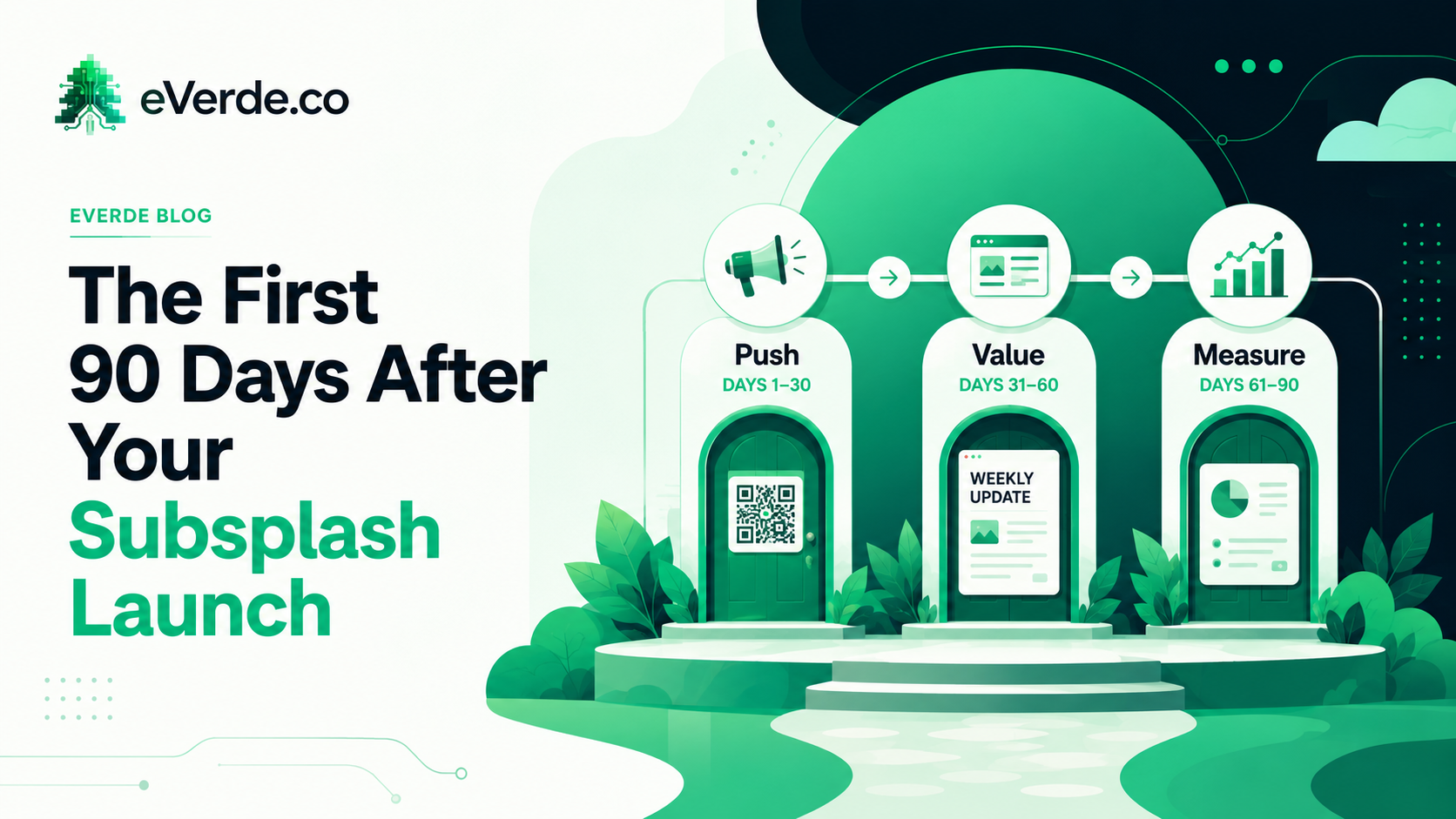
Days 1 Through 30: Push
The first month is pure saturation. Your goal is downloads, visits, and awareness. Nothing else matters yet.
QR codes go everywhere. On the bulletin. On the lobby screens. On the seat backs. On the welcome card. On the bathroom mirror. On the coffee station. Every physical surface in your building that people see should have a QR code pointing to the app or the Weekly Update.
Stage mentions happen every single week. Not "do not forget to download the app." Specific reasons tied to what is happening that week. "Small group sign-ups close Friday. If you have the app, registration is one tap. If you do not, now is a great time to download it."
Every email, every social post, every text message from the church points back to the website or the app. Not to a separate platform. Not to a PDF attachment. To the living system you just built. Every communication channel you control should be funneling people into the new ecosystem.
Staff accountability starts now. If a staff member sends a PDF instead of a link, gently redirect. If a ministry leader creates a Facebook event instead of a Subsplash event, redirect. The congregation follows the staff. If staff do not use the system, the congregation will not either.
Days 31 Through 60: Value
By month two, the saturation push transitions to a value play. The question shifts from "have you downloaded the app" to "did you see what was on the app this week."
The Weekly Update is your anchor. If you have built a strong Weekly Update page, it becomes the reason people open the app every week. Not because you told them to. Because that is where the information lives. When people realize the app is the fastest way to find out what is happening at church this week, adoption stops being something you push and starts being something they pull.
Push notifications shift to value mode. One notification per week. Always useful. Always specific. "This Sunday: combined service at 10am, no evening service." Or "Registration for fall small groups opens Wednesday. Tap here to browse groups." Every notification earns the right to send the next one.
Start watching what gets used. Which pages have the most traffic? Which events get the most registrations? Which notifications get the most opens? This data tells you what your congregation actually values, not what you think they should value.
Days 61 Through 90: Measure
The third month is about measurement and adjustment. You have 60 days of data. Use it.
What pages are people visiting? If the Weekly Update is the top page, your communication architecture is working. If the homepage is the top page and nothing else gets traffic, your navigation is failing to move people deeper.
What events are getting registrations? If certain event types consistently outperform others, that tells you what your congregation wants more of. It also tells you which event categories might need better promotion or better page design.
Where are people dropping off? If people open the app but do not navigate past the home screen, the app structure needs work. If people visit the events page but do not register, the registration flow has too much friction.
The Adoption Curve
Not everyone adopts at the same speed. Your early adopters downloaded the app the day you announced it. They are already using it daily. They are your champions. Use them. Ask them to share their experience. Let them model the behavior you want the rest of the congregation to follow.
Your mainstream adopters need repeated exposure and clear value before they move. That is what the first 60 days are for. By the time month three arrives, most of them should be using the system regularly.
Then there are the Keiths. The people who are not opposed to the new system but need time, respect, and a bridge. The QR code on the bulletin with "Printed on Friday. May be out of date." is that bridge. Do not force them. Create tension. Give them authority over the transition.
The 90-Day Check-In
At the end of 90 days, do a formal audit. App downloads versus congregation size. Weekly Update traffic. Event registration rates. Push notification open rates. Staff compliance with the new workflows. What is working, what is not, and what needs to change for the next quarter.
If you work with ReedVerde, this audit is built into the engagement. If you are doing it yourself, schedule it now. Put it on the calendar for 90 days after launch. Do not let it drift.
The first 90 days are not about perfection. They are about momentum. Build it during the push phase. Sustain it during the value phase. Refine it during the measure phase. That is how a launch becomes a rhythm.
Originally published on reedverde.com