
SEO Will Be Dead in 2027. Here Is What Your Church Website Needs Next.
 Reed VerdesotoDigital Systems Architect
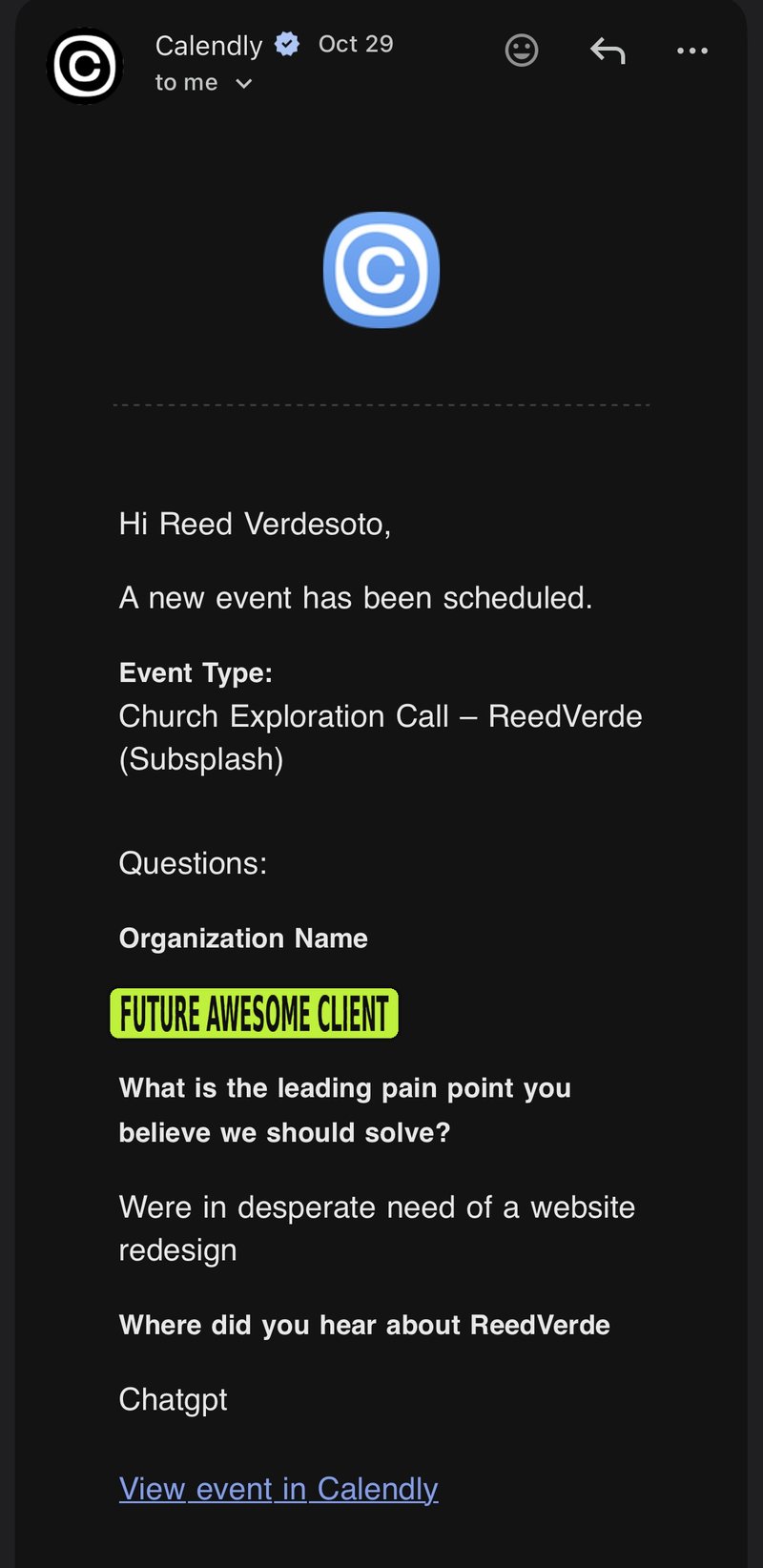
A new booking came in on my calendar recently. The form asked two questions.
"What is the leading pain point you believe we should solve?"
"Were in desperate need of a website redesign."
"Where did you hear about ReedVerde?"
"Chatgpt."
The visitor reported finding ReedVerde through ChatGPT and booked a call about a website redesign.
My prediction
I've been saying it for a while: search engine optimization in its current form will be dead in 2027. That's my prediction, not a research finding.
I don't mean the foundations go away. Crawlable pages, clear headings, accurate metadata and good structure still matter. As I put it on a planning call this summer, "you still have to use the format of SEO to write that stuff." What changes is how people find you. More of them will ask a question and get an answer, instead of scrolling a page of ten links.
What that booking does and doesn't prove
It's a reported referral and a booked conversation. It's not a finished project yet. We don't have the prompt they typed or the answer they got, so I can't say which page or which change earned it.
It is one reported referral, and it is the kind of discovery I have been building toward.
What the research says
Semrush studied more than 500 digital marketing and SEO topics and projected that AI search could send more visitors to websites than traditional search by early 2028, sooner if Google makes AI Mode the default. That's a forecast for their topic set, not a done deal for every industry. It points the same direction I do. (Semrush, July 2025)
Pew Research Center looked at the real browsing of 900 U.S. adults in March 2025. When Google showed an AI summary, people clicked a traditional result on 8% of visits. Without one, it was 15%. Links inside the summary got clicked on 1% of visits. (Pew, July 2025) Cloudflare describes the bigger picture: for nearly 30 years the deal was "let a search engine crawl your content, and it sends you visitors," and answer engines are breaking that deal. (Cloudflare, July 2026)
For a church, that means a family looking for a place to visit may get their answer before they ever reach your site. If your site doesn't explain who you are clearly, the answer may not include you.
And most people haven't caught up. In a Semrush survey of 481 marketers, business owners and SEO professionals, only 22% said their SEO and AI search work was fully integrated across strategy, execution and reporting. (Semrush, June 2026) That's a survey of marketers, not a count of websites. It still tells you there's room to get ahead.
SEO, AEO and GEO in plain words
SEO is search engine optimization. It helps search engines find and understand your pages.
AEO is answer engine optimization. "AEO is very specific like answers to specific questions." What time is the service? Is there something for my kids? Where do I park?
GEO is generative engine optimization. It's about being the trusted authority on a subject, so an AI that builds an answer has a reason to cite you.
They overlap. You still need the foundation. You're just building for more than one way in. Google's AI search guidance says SEO best practices remain relevant, no special AI schema is required, and inclusion is not guaranteed.
Why waiting costs you
Clear pages take thought. Good answers come from real ministry experience written down. Fixing structure and measuring results takes time. If you start when everyone agrees the shift happened, you start behind.
What we do about it at ReedVerde
We start with the questions your visitors actually ask and answer them on your site in plain language. Three Doors to Your Church's Digital House explains how the website, app and Connection Point work together. We make sure each ministry has a clear page and a clear next step, using audience based church website structure. We check that your pages can be read by crawlers, that your metadata and structured data are accurate, and that your Subsplash site and app work together so a visitor can go from an answer to a plan to visit. Then we track where inquiries come from, starting with one simple question on your forms: how did you hear about us? For a practical church example, see Subsplash Fill In Notes with ChatGPT and Pulpit AI.
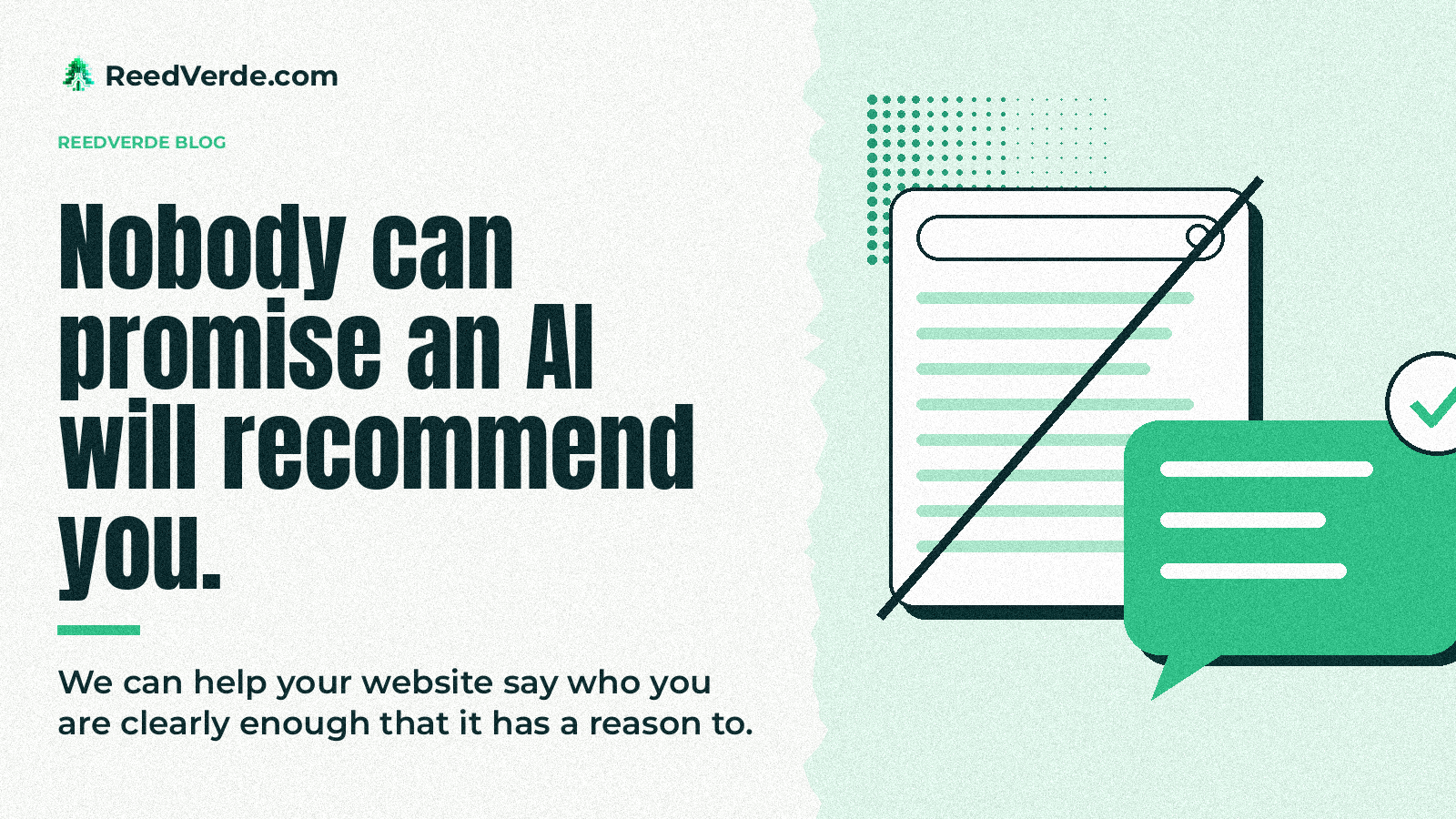
Nobody can promise an AI will recommend you. We can help your website say who you are clearly enough that it has a reason to.
If your team wants to see where your site stands, book a 30 minute Exploration. For business custom systems and AI workflows rather than church Subsplash consulting, see eVerde.dev.
Build Forward. Not Over.

Read More
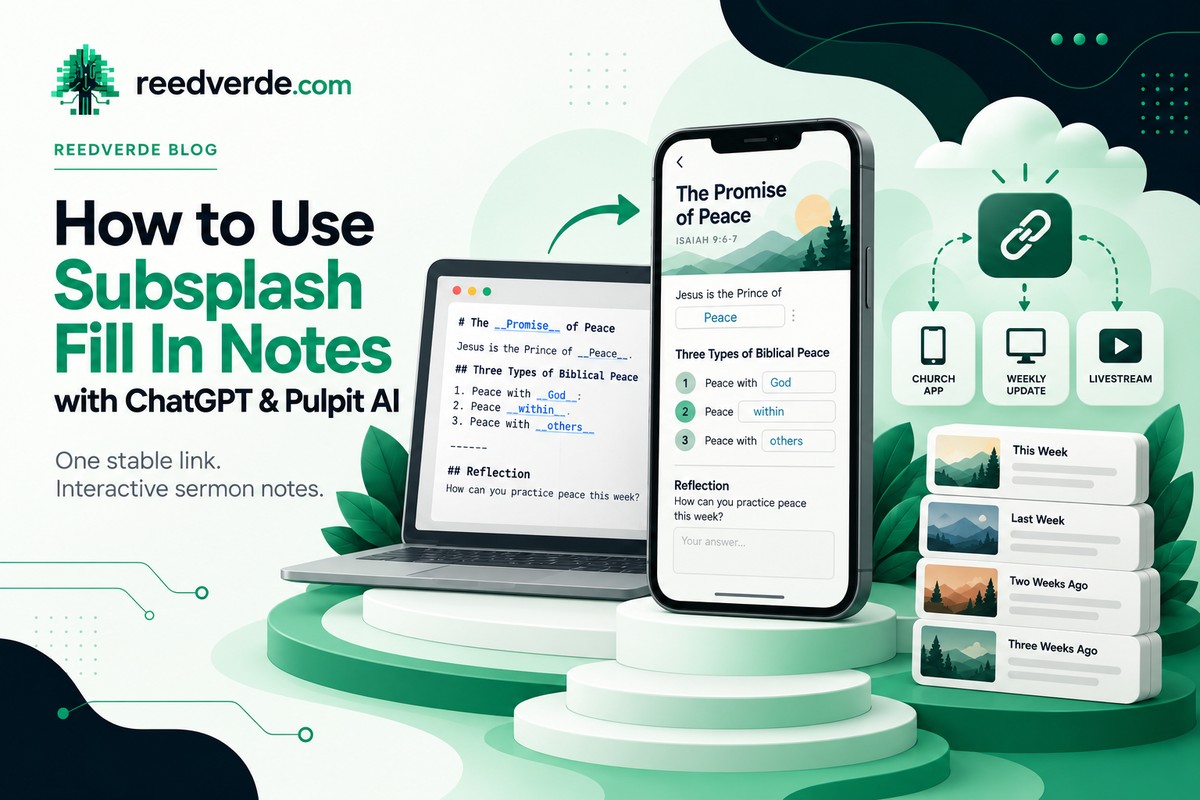
How to Use Subsplash Fill In Notes With ChatGPT and Pulpit AI
Most churches already have what they need to create interactive sermon notes. They just waste time replacing links every week. Pulpit AI and ChatGPT simplify creation, and Subsplash handles interaction and archiving.
Read more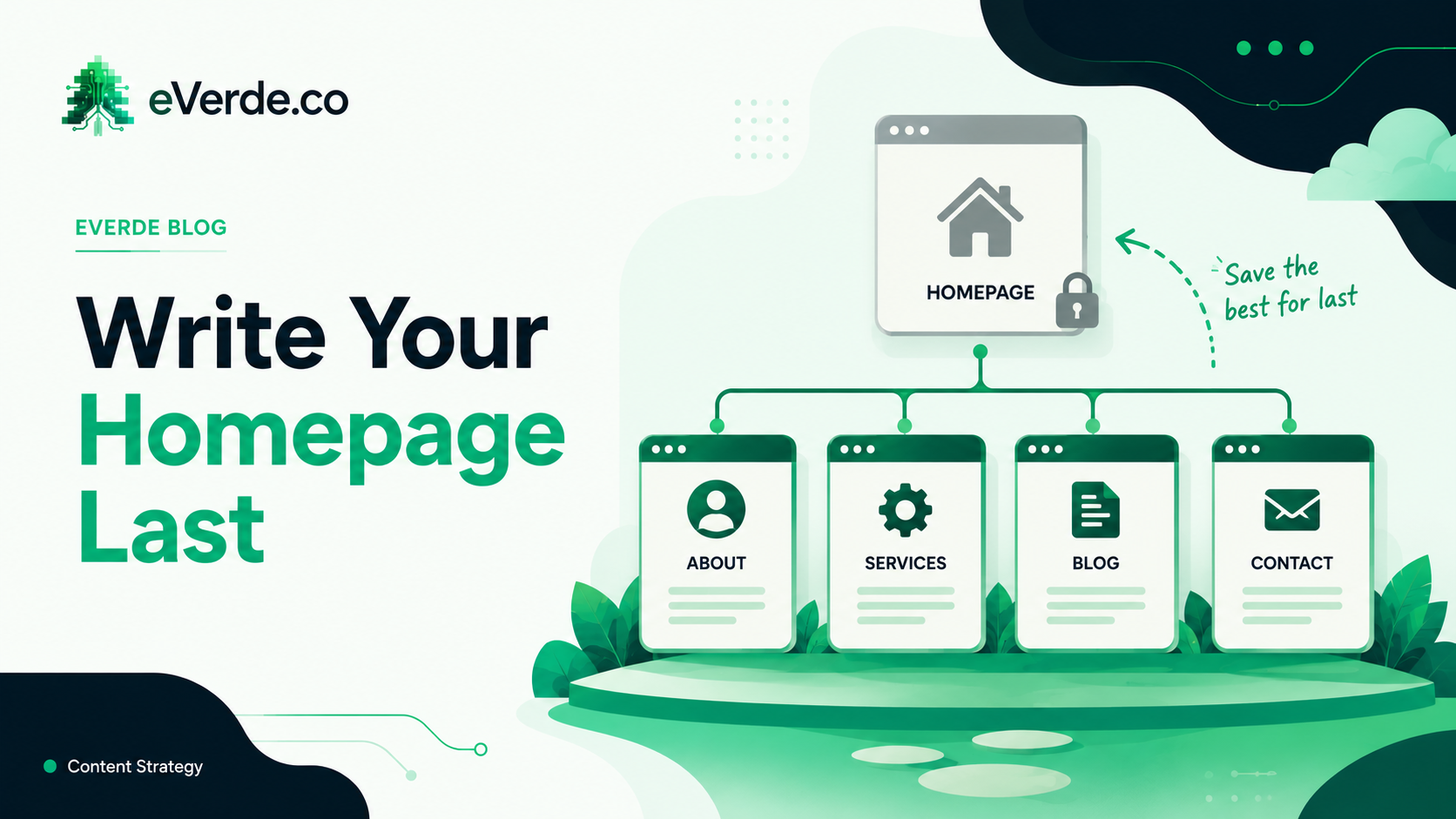
Write Your Homepage Last
Your homepage may be the only page a visitor reads, so it needs to tell a complete story. The problem is not that most church homepages are too cluttered. It is that they are bland. Here is how to build a homepage that gives every visitor a tour instead of a hallway of doors they cannot read.
Read more
The Engagement Formula: Why Your Church Website Isn't Converting
Every page on your church website is either increasing engagement or killing it. There is a formula. And once you see it, you cannot unsee how most church websites break it.
Read moreAbout Reed Verdesoto
I'm Reed Verdesoto, an independent Subsplash architect. I've built custom apps, websites, and communication systems for 500+ churches, ministries, and organizations, and I help teams turn a scattered digital presence into one that actually works and keeps working.
If something on your setup feels broken, disconnected, or harder than it should be, reach out. I'd rather have a real conversation about what you're dealing with than sell you a package.
Get in touchOriginally published on reedverde.com